01Install
About 20 minutes per client.
The browser-based Installer sets up DataMind OS on a Linux server the client controls, physical or virtual, in the client's data center or cloud account. It sizes memory for the host and shows live logs while it works.
Updates ship monthly and are applied from the browser, for the whole stack or for selected services. Guides to install, run and use DataMind OS live at datamind.guide.
02License
One plan per client company.
Each client company runs on its own license, priced per company, not per user, so the client's teams can grow without changing the price.
Every client can start with the two-month free trial on its own servers: the full OS, every app, no card.
The plan
One plan, $4,999 a month or $49,999 a year, every app, a two-month free trial on your servers.
Pricing03Full Customization
The client's colors and logo.
Color themes start from a light or dark base and cover brand and status colors, 12 chart colors, editor colors and 12 background patterns, with live previews of the app, charts and SQL editor.
Admins upload the client's light and dark logos for DataPrism report footers and Slides, and set the company name that fills new decks.
04Governance
The client's rules, enforced.
- Access in the database. Object, column and row rules are enforced in the database through per-role views, so they hold in the SQL editor, BI, Minds and external tools.
- PII Shield. An on-premise detection model checks what people send to Minds and persistent training cards, and columns marked as personal data reach models as tokens.
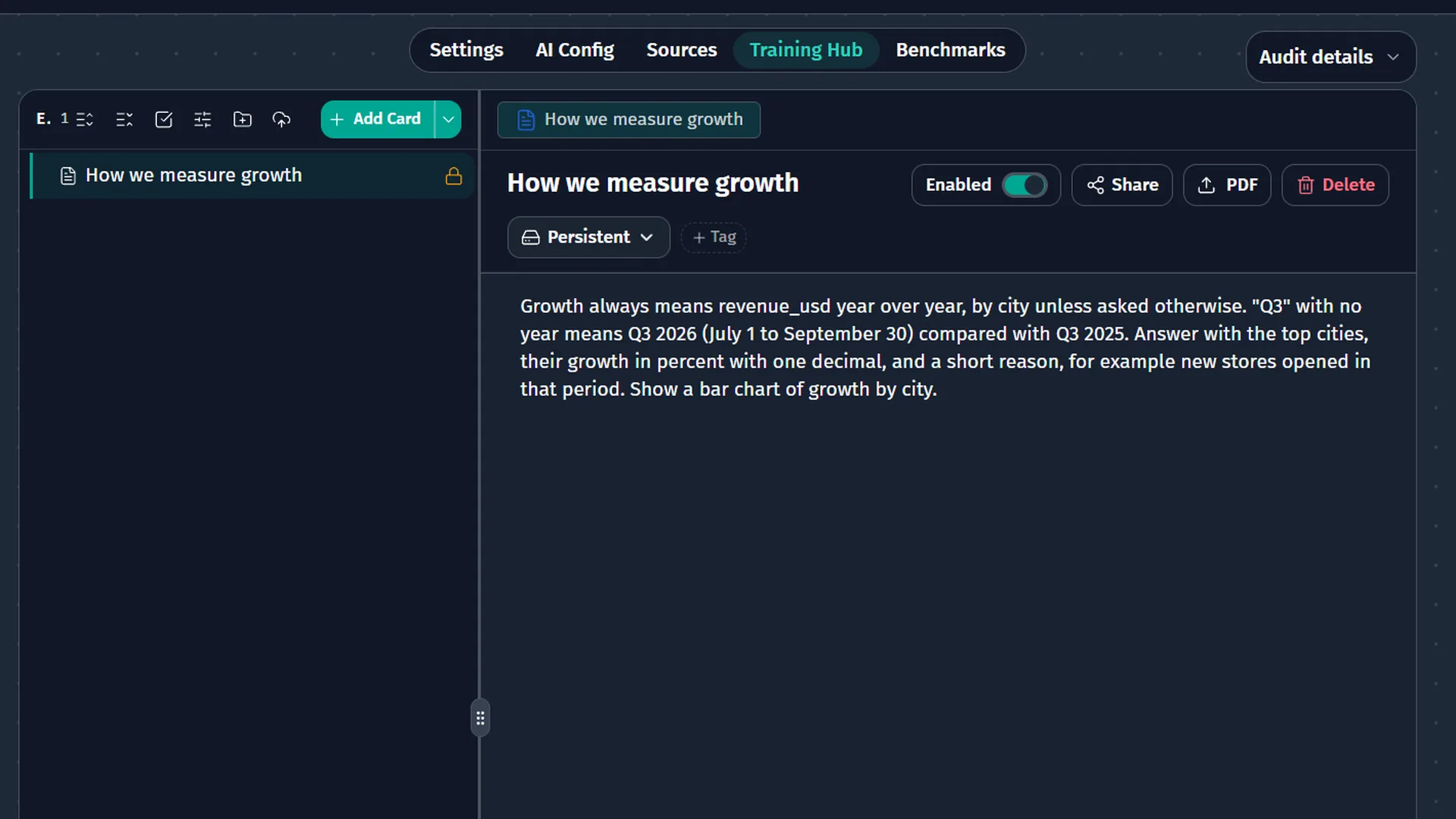
- Training Hub. Write the client's rules and definitions as training cards that a Mind always applies or retrieves when relevant, with a version history on every card.
05Writeback
Back into the client's ERP and CRM.
Reverse ETL pushes modeled data back into the systems the client's teams run on, such as orders in the ERP and accounts in the CRM.
Lineage draws each writeback beside the models, Minds and decks that read the same tables.